Car in a Ditch Near Miles City, MT? How Winch-Out Recovery Works
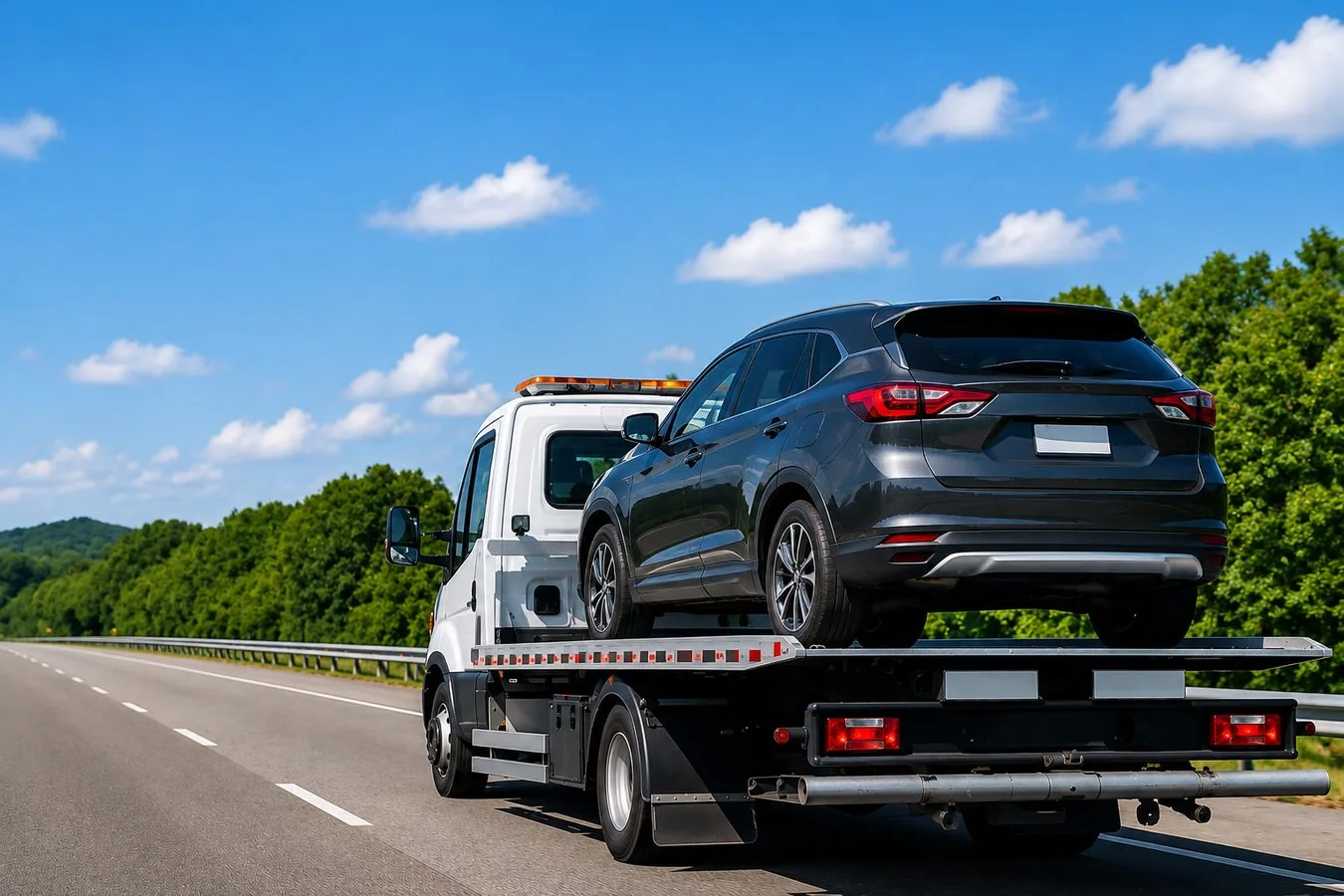
One second you are cruising down a Custer County backroad, and the next your right tires have slipped off the shoulder into soft ground. It happens fast around Miles City — black ice on the I-94 on-ramps in January, a rain-slicked gravel road out toward Terry, or a soft spring shoulder along MT-59 that gives way when you ease over for an oncoming truck. If your car is sitting in a ditch right now, the most important thing is this: do not panic, and do not gun the engine. This guide walks you through exactly what to do, how professional winch-out recovery works, what it costs in the Miles City area, and when to stop trying and call for a tow.
We run winch-out and towing calls across Custer County (ZIP 59301) and the surrounding towns every week, and the drivers who come out of it best are the ones who stay calm, protect themselves from traffic, and know when a job is bigger than a floor mat under a tire. Here is the full picture.
First, Get Yourself Safe Before You Worry About the Car
A vehicle in a ditch is replaceable. You are not. Before you think about the car, think about the traffic behind you. On a road like I-94, closing speeds are 75 mph or more, and a stopped or half-off vehicle is hard to see, especially at dusk or in blowing snow.
- Turn on your hazard lights immediately. If it is dark or visibility is low, this is the single most valuable thing you can do.
- Stay buckled and stay inside if you are close to a live traffic lane. The steel around you is far better protection than standing on a narrow Montana shoulder.
- If you must exit, leave from the downhill or field side — the side away from traffic — and get well back from the roadway.
- Set out flares or reflective triangles if you carry them, placing them 100 to 200 feet behind the vehicle so approaching drivers get real warning.
The U.S. National Highway Traffic Safety Administration recommends staying visible and getting clear of moving traffic before attempting any roadside fix; you can read their roadside emergency guidance for more. Once you and your passengers are safe, then and only then should you assess the car.
Should You Try to Get the Car Out Yourself?
Sometimes a car that has drifted onto a soft shoulder can be driven out with a light touch. But the instinct most people have — flooring it — is exactly what turns a five-minute problem into a two-hour recovery. Spinning tires polish the ground into a slick trough, sling mud, and can overheat an automatic transmission. On snow or wet clay, you will dig yourself in deeper with every second.
You might safely self-recover if all of these are true: the vehicle is fully off the roadway, it is sitting on relatively level ground, no tire is buried past the hub, and you have traction material handy (floor mats, cardboard, sand, or kitty litter under the drive wheels). Ease onto the gas gently, straighten the wheel, and try to rock the car with slow shifts between drive and reverse. One or two calm attempts — that is it.
Stop and call for help the moment you see any of the following: a wheel dropped below the axle, the car nosed downhill toward the Yellowstone River bottoms or a drainage ditch, a steep embankment like the ones along I-94, any grinding or scraping underneath, or a vehicle tilted so far that opening a door feels risky. Those are winch-out jobs, not floor-mat jobs.
How Professional Winch-Out Recovery Actually Works
A winch-out is a controlled pull, not a yank. When our operator arrives, the first thing they do is assess the scene: where the vehicle sits, the angle it needs to travel to get back on solid ground, the ground conditions, and any obstacles like fences, guardrails, or the steep cut banks common along the interstate. That read determines the rigging.
From there, the recovery usually follows a predictable sequence:
- Position the truck. The tow truck is set on stable ground at the right angle so the winch line pulls the car along a path that will not roll it or drag it into a hazard.
- Attach to a rated point. The winch cable or strap connects to a factory tow hook or frame point — never a bumper or suspension part — often with a snatch block to change the pull angle or double the pulling power.
- Winch it out slowly. The operator uses steady tension, sometimes with the driver gently steering, to walk the vehicle back onto the road surface without shock-loading anything.
- Inspect before you drive off. A good operator checks the tires, wheels, and undercarriage. If there is damage, they will recommend loading it onto a flatbed rather than letting you drive a compromised car.
This is where experience matters. Rigging a pull at the wrong angle can flip a car or snap a strap. A DOT compliant, licensed and insured operator carries rated shackles, straps, snatch blocks, and the training to use them — which is why a proper winch-out looks almost boring when it is done right.
Winch-Out vs. Flatbed Tow: Which Do You Need?
Not every ditch call ends with your car back on its wheels and drivable. Sometimes the smarter move is to recover the vehicle and then load it. Here is how the two services differ and when each makes sense.
| Situation | Best Service |
|---|---|
| Car slid off, no visible damage, drivable once freed | Winch-out, then drive away |
| Vehicle stuck AND has flat tires, bent wheels, or undercarriage damage | Winch-out + flatbed tow |
| All-wheel-drive or low-clearance car that cannot be safely dragged | Winch-out with flatbed loading |
| Vehicle down a steep I-94 embankment or rolled | Heavy-duty recovery + flatbed |
Flatbed towing is the gentlest way to move a car that has been through a ditch, because all four wheels ride up off the road with nothing dragging. For all-wheel-drive vehicles it is often the only correct method. If your car will not track straight or you hear anything odd after a recovery, ask for the flatbed — it is cheap insurance against a bigger repair bill. We also run wheel-lift trucks for tight spots and standard tows when a flatbed is not required.
What a Ditch Recovery Costs Around Miles City
Pricing depends on the specifics, but here is a realistic range for the Miles City and Custer County area so you know roughly what to expect:
- Simple winch-out (car a few feet off a firm shoulder): roughly 75 to 150 dollars.
- Moderate recovery (mud, snow, steeper angle, extra rigging): roughly 150 to 250 dollars.
- Winch-out plus flatbed tow to a shop or home: the recovery fee plus standard towing mileage.
- Heavy or complex jobs (deep embankment, rollover, larger vehicle): quoted on scene.
Time of day matters less than you might think with a true 24/7 operator — we do not tack on a premium just because it is 2 a.m. What changes the price is the difficulty: how far off the road, the ground conditions, and whether a second truck or extra equipment is needed. Always ask for a quote when you call, and a straight-shooting company will give you one before the truck rolls.
Off the Road in Custer County? We Will Get You Out
24/7 winch-out recovery, flatbed towing, and roadside assistance across Miles City, Forsyth, Terry, Baker, Broadus and beyond. Fast, fair, and fully insured.
📞 Call (406) 313-2992 NowFrequently Asked Questions
How much does it cost to pull a car out of a ditch near Miles City?
Most winch-out recoveries around Miles City run about 75 to 250 dollars depending on how far the vehicle is off the road, the angle, ground conditions, and whether extra rigging or a second truck is needed. A car resting a few feet off the shoulder on firm ground is at the low end; a vehicle buried in mud, snow, or down a steep I-94 embankment costs more. Ask for a quote when you call so there are no surprises.
Should I try to drive my car out of the ditch myself?
Usually no. Spinning your tires can dig you in deeper, overheat the transmission, and hide undercarriage or suspension damage that makes the car unsafe to drive. If the vehicle is off the roadway on level ground and you can safely place traction under the drive wheels, one gentle attempt is fine. If it does not move easily, stop and call a licensed and insured tow operator for a proper winch-out.
Have you ever slid off the road on an icy Montana morning — and what got you unstuck?