Car Overheating in Miles City, MT? Here Is Exactly What to Do
You are cruising down I-94 outside Miles City on a 95-degree July afternoon when the temperature needle swings toward the red and a faint smell of hot syrup drifts through the vents. Your stomach drops. An overheating engine is one of the few car problems that gets dramatically worse the longer you ignore it — and out here in Custer County, the nearest shade or shop can be a long way off. The good news is that the right moves in the first two minutes can be the difference between a $40 jug of coolant and a $3,000 engine rebuild.
This guide walks you through exactly what to do when your car overheats near Miles City, MT, what to avoid, and how to know when it is time to stop nursing it along and call for a tow. We run 24/7 emergency towing across Miles City, Forsyth, Terry, and the rest of the 59301 area, so we have pulled a lot of overheated vehicles off the shoulder — and almost every one could have been saved by acting a little sooner.
Why Cars Overheat Around Miles City in the First Place
Eastern Montana summers are hard on cooling systems. Long, flat stretches of I-94 and US-12 let you hold highway speed for an hour or more, which sounds easy on an engine but actually loads the cooling system continuously with little chance to recover. Add ambient temperatures in the 90s, a headwind full of prairie dust, and a climb out of the Yellowstone River valley, and a marginal cooling system will finally show its hand.
Most overheating in our area traces back to one of a handful of causes: low coolant from a slow leak, a failing thermostat stuck closed, a worn water pump, a clogged or bug-caked radiator, or a cooling fan that has quietly stopped spinning. Older trucks hauling stock trailers or campers toward Baker and Broadus are especially prone to it because towing multiplies the heat load. None of these fix themselves, which is why an overheating gauge is a signal to act, not to hope.
What to Do the Moment Your Temperature Gauge Spikes
When you see the needle climbing or a temperature warning light, move through these steps in order. Speed matters — heat damage compounds by the second once coolant stops doing its job.
- Turn off the air conditioning. The A/C compressor adds a real heat load to the engine and its condenser sits right in front of the radiator. Shutting it off is the single fastest way to take some strain off the system.
- Crank the heater to full hot. It feels miserable on a hot day, but your heater core is essentially a second radiator. Running the heater and fan on high pulls heat out of the engine and dumps it into the cabin, which can buy you a few critical degrees and a few extra miles.
- Get off the road safely. Signal, ease onto a wide shoulder or an exit ramp, and get as far from traffic as you can. On I-94 that means well past the white line, wheels off the pavement, hazard lights on. A predictable, gentle pull-over beats a panicked stop in a live lane.
- Shut the engine off. Once you are safely stopped, kill the engine. Every minute it idles hot is a minute the metal keeps cooking. Leave the key in accessory position if you want to keep an eye on the gauge as it falls.
- Pop the hood — but do not touch anything yet. Releasing the hood latch lets heat escape and starts the cooling process. Stand back. Do not reach toward the radiator cap or reservoir while everything is steaming.
- Wait it out. Give it a solid 20 to 30 minutes before you inspect anything. If you see steam or spraying coolant, you almost certainly have a leak or a burst hose, and this is a tow situation, not a roadside patch.
What NOT to Do When Your Engine Is Overheating
Some instincts make things much worse. Keep these firmly in mind:
- Never open a hot radiator cap or coolant reservoir. The system is pressurized and the coolant can be well over 200 degrees. Cracking that cap can send a geyser of scalding fluid straight up. Wait until everything is cool to the touch — or let a pro handle it. The AAA guidance on overheating is blunt about this for good reason.
- Do not pour cold water on a hot engine. Dumping cold water over a scorching aluminum head or block can crack it from thermal shock. If you are adding coolant later, do it slowly with the engine running and only once it has cooled down.
- Do not keep flogging it toward home. "It is only ten more miles" is how a cheap fix becomes a blown head gasket. Ten miles of overheating can total an engine.
- Do not ignore a repeat episode. If the car cools down, you top it off, and it overheats again within a few miles, the underlying problem is still there. Stop and get it towed to a shop rather than gambling on the next hill.
Can You Keep Driving, or Should You Pull Over for Good?
Here is the honest rule of thumb we give callers. If the gauge nudged up but never hit the red, the car cooled quickly once you stopped, and it holds a normal temperature after you top off the coolant, you can usually limp it carefully to a shop with the heater blasting and the A/C off — checking the gauge constantly. If the needle buried itself in the red, you saw or smelled steam, you heard any ticking or knocking, or it overheats a second time, the driving is over. At that point the smart, cheap decision is a flatbed tow.
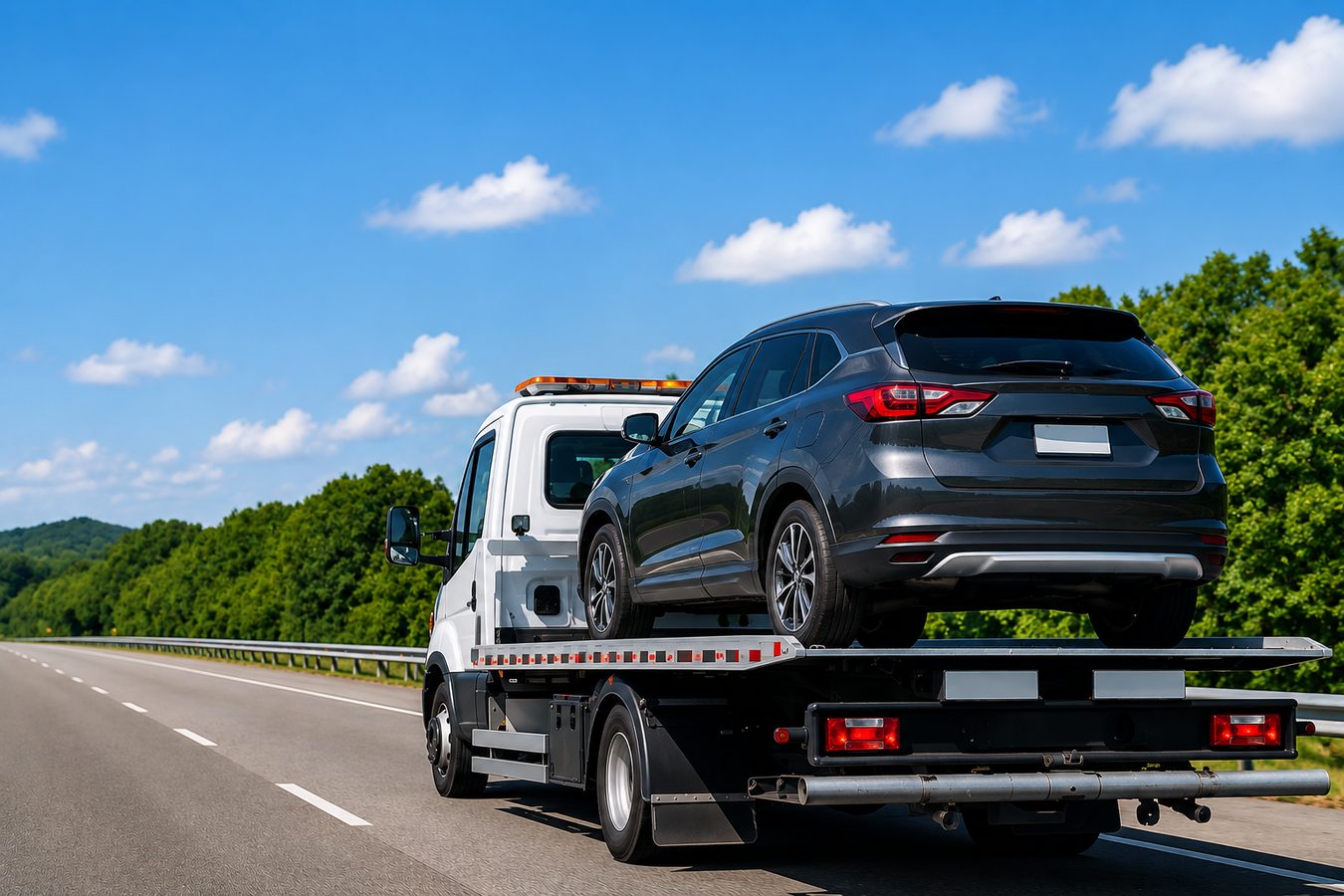
We say flatbed specifically for a reason. A car with a suspected cooling or engine problem should ride, not roll. Loading it onto a flatbed keeps the drivetrain completely off the ground and eliminates any chance of turning a coolant issue into transmission or bearing damage on the way to the garage. Every one of our trucks is DOT compliant and we are fully licensed and insured, so your vehicle is covered from the moment it leaves the shoulder.
What a Tow Costs vs. What an Overheated Engine Costs
Drivers hesitate to call a tow because they are thinking about the tow bill. It helps to see the real trade-off. A local tow is a rounding error next to engine repair.
| Situation | Rough Cost in the Miles City Area |
|---|---|
| Local flatbed tow within Miles City / 59301 | $95 – $150 |
| Tow from I-94 shoulder to a Miles City shop | $125 – $225 |
| New thermostat or hose repair | $150 – $400 |
| Water pump replacement | $400 – $900 |
| Blown head gasket from driving overheated | $1,500 – $2,500+ |
| Warped head or full engine rebuild | $3,000 – $5,000+ |
The math is simple. Nursing an overheating engine another few miles to dodge a $130 tow is how people end up with a $3,000 repair. When in doubt, shut it down and let us bring the flatbed. For a fuller breakdown of local rates, our honest towing cost guide for Miles City lays out exactly what affects the price.
Overheating and stranded? We are on call right now.
24/7 emergency and flatbed towing across Miles City, Custer County, and the I-94 corridor. Typical response time 30 to 45 minutes.
📞 Call (406) 313-2992Frequently Asked Questions
Can I keep driving a short distance if my car is overheating?
Only in a pinch, and only if the temperature gauge is not pegged in the red. Turn off the A/C, turn the heater on full, and drive gently to the nearest safe spot. If the gauge stays red or you see steam, stop and shut the engine off. Driving an engine that is truly overheating can warp the head and cost thousands, far more than a tow across Custer County.
How long should I wait before opening the hood or radiator cap?
Wait at least 20 to 30 minutes with the engine off before opening the hood, and never open the radiator cap or coolant reservoir while the system is hot. Pressurized coolant can reach well over 200 degrees and cause serious burns. If you cannot safely add coolant or the car overheats again within a few miles, call for a flatbed tow instead of risking the engine.
Have you ever watched the temp gauge climb on a hot stretch of I-94? What did you do?